Using the Not So Simple View of Writing in the Classroom: Transcription
“Writing is such a struggle for my students. How do I help them?” ask teachers everywhere.
“Why do we have to write?!?” cry kids all over the world (probably).
Although I’m not prepared to answer the latter, I can definitely help with the former. Let me introduce you to the Not So Simple View of Writing, coined by Berninger and Winn in 2006.
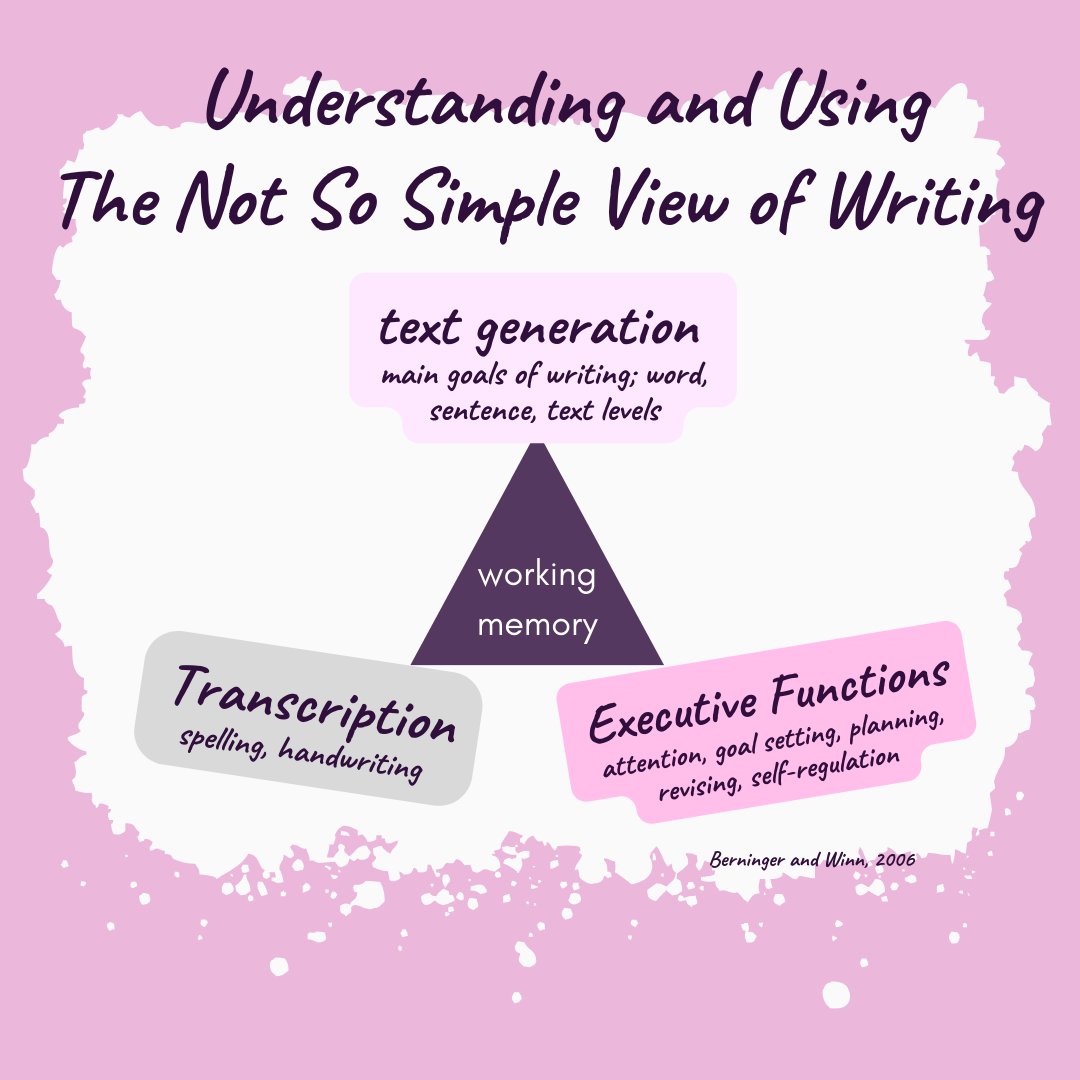
Writing is a complex process that requires our brains to do multiple things simultaneously. If you pat your tummy and rub your head and say the ABC’s backwards at the same time, you’ll get a sense of the physiological feeling that happens when kids are asked to write.
In this post, we’ll focus on making tweaks to our current instruction that best support students in transcription.
Supporting transcription can be done by making some purposeful instructional tweaks to increase achievement for all learners.
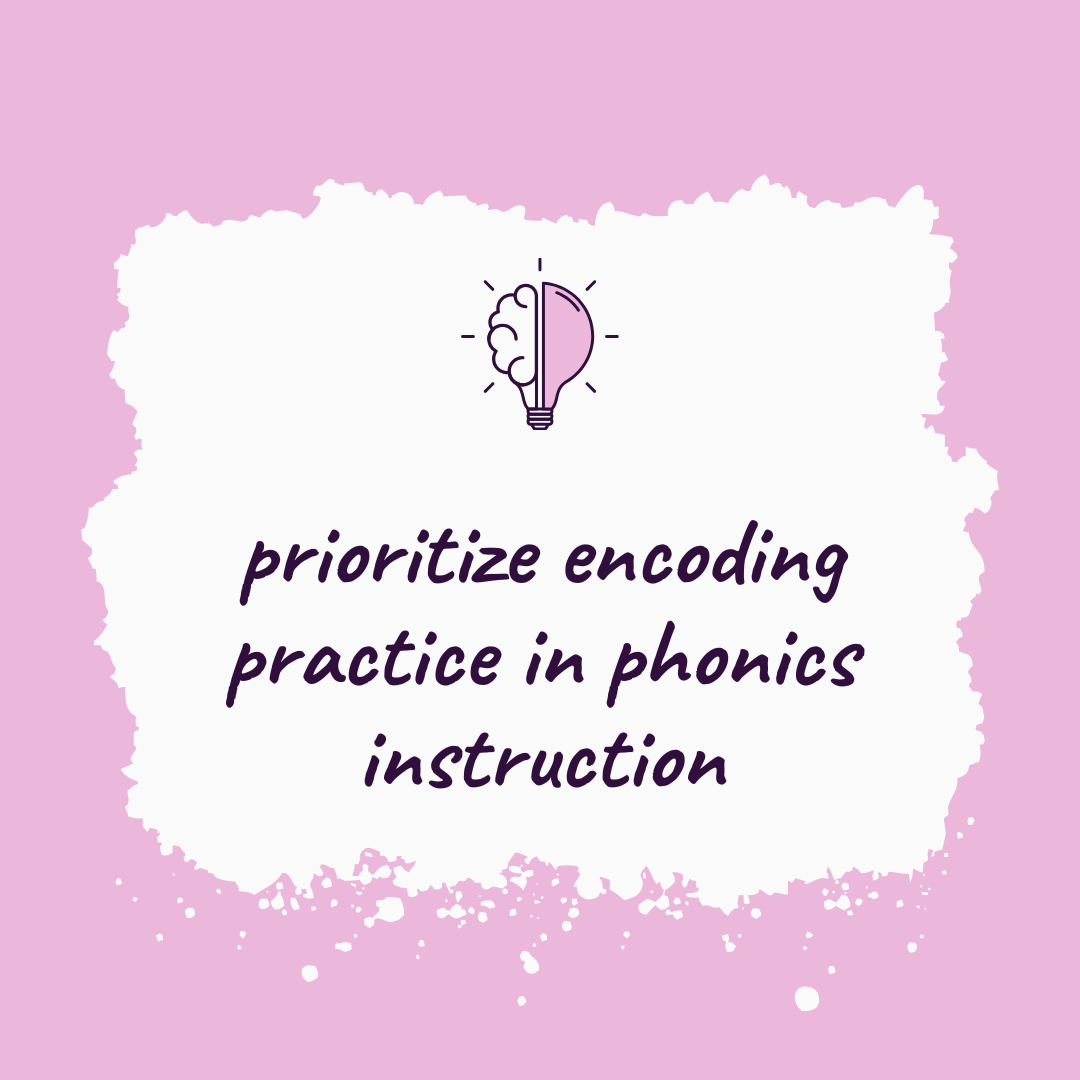
Orthographic mapping is the brain process we use to read words, and it helps us spell words, too. In phonics instruction, we teach students words with the common letter patterns, such as words that end in -ink, like think, pink, drink, and sink. We teach students that the sound of /ink/ is spelled i-n-k, so they can decode it when they see it. We need to make sure we give them encoding practice with those words, too! Just as automaticity in word recognition improves reading fluency, automaticity in encoding improves writing. When students want to write a word but struggle to spell it, the whole writing process slows down, leading to frustration. A simple tweak would be to add dictation practice into your phonics block- don’t reserve it for the spelling test at the end of the week! Make encoding a part of your daily routine.
Explicit instruction of pencil grip, posture, and letter formation may be necessary for students at any grade level, especially if they are used to typing or screen-swiping. Research has shown that improved legibility in handwriting leads to overall improved writing quality and higher grades in writing for older students. (Graham, 2009-2010; Reutzel et al., 2017) If you are adding encoding practice to your phonics block, that’s a perfect spot to add in explicit instruction on grip, posture, and letter formation.
If planning to add encoding practice that included explicit instruction, you have the perfect opening to model using physical tools like a pencil grip, a supportive backrest, or a modified notebook for left-handed people. Doing so teaches students that the use of tools for accessibility is normal and necessary.
The best way to improve transcription skills is to practice transcription. We can encourage students to write by hand first, then transfer their writing to a digital tool second. This practice has a secondary effect of providing a natural segue into re-reading one’s writing for clarity and style.
Depending on the grade-level, additional supports and scaffolds may be necessary.
For my overview on The Not So Simple View, click here.
If your student struggles with text generation, read more here.
If they struggle with executive function, read more here: (coming soon!)
For the full text on the Not So Simple View of Writing, click here. For a great take on it by Joan Sedita, click here.