Using the Not So Simple View of Writing in the Classroom: Text Generation
“Writing is such a struggle for my students. How do I help them?” ask teachers everywhere.
“Why do we have to write?!?” cry kids all over the world (probably).
Although I’m not prepared to answer the latter, I can definitely help with the former. Let me introduce you to the Not So Simple View of Writing, coined by Berninger and Winn in 2006.
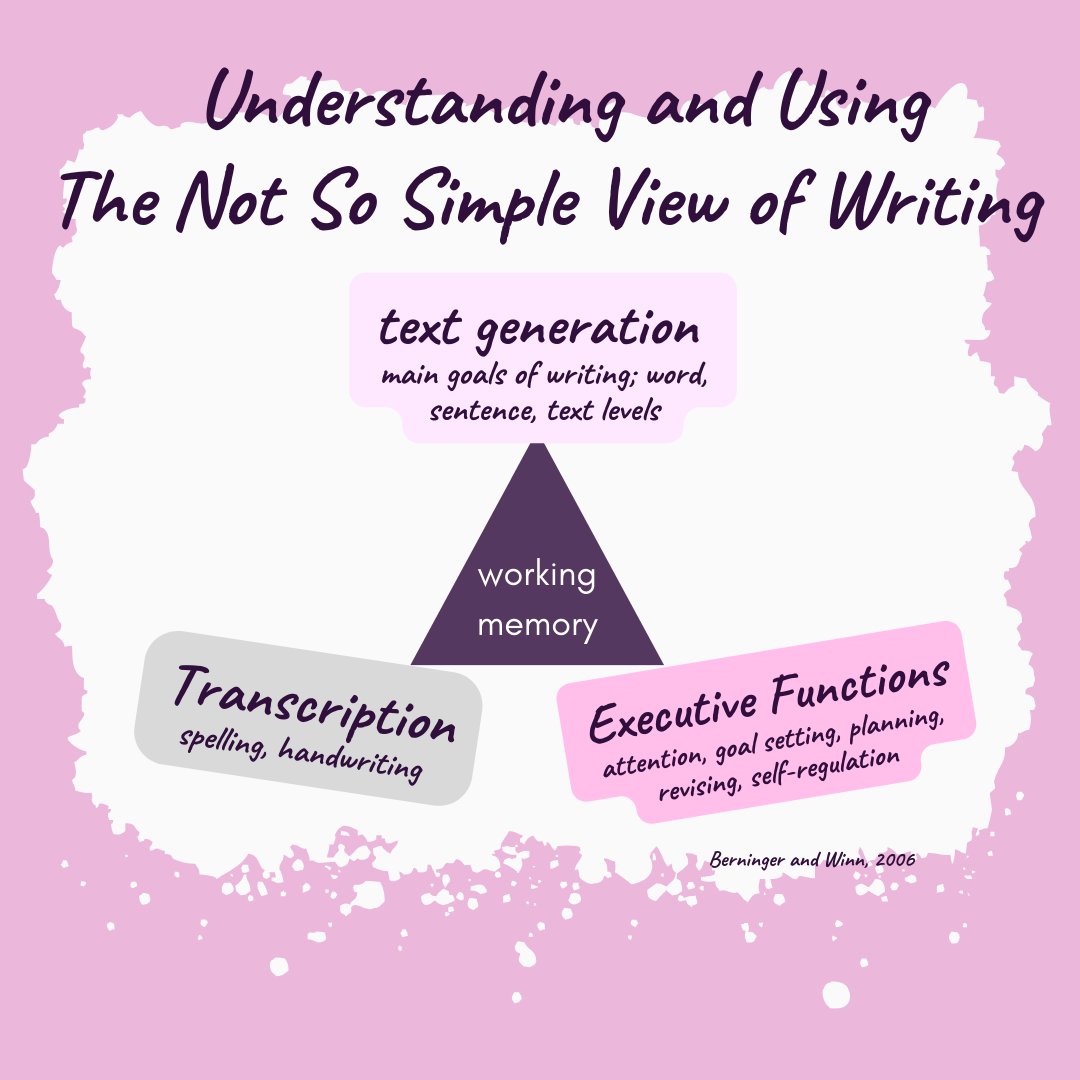
Writing is a complex process that requires our brains to do multiple things simultaneously. If you pat your tummy and rub your head and say the ABC’s backwards at the same time, you’ll get a sense of the physiological feeling that happens when kids are asked to write.
In this post, we’ll focus on making tweaks to our current instruction that best support students in text generation.
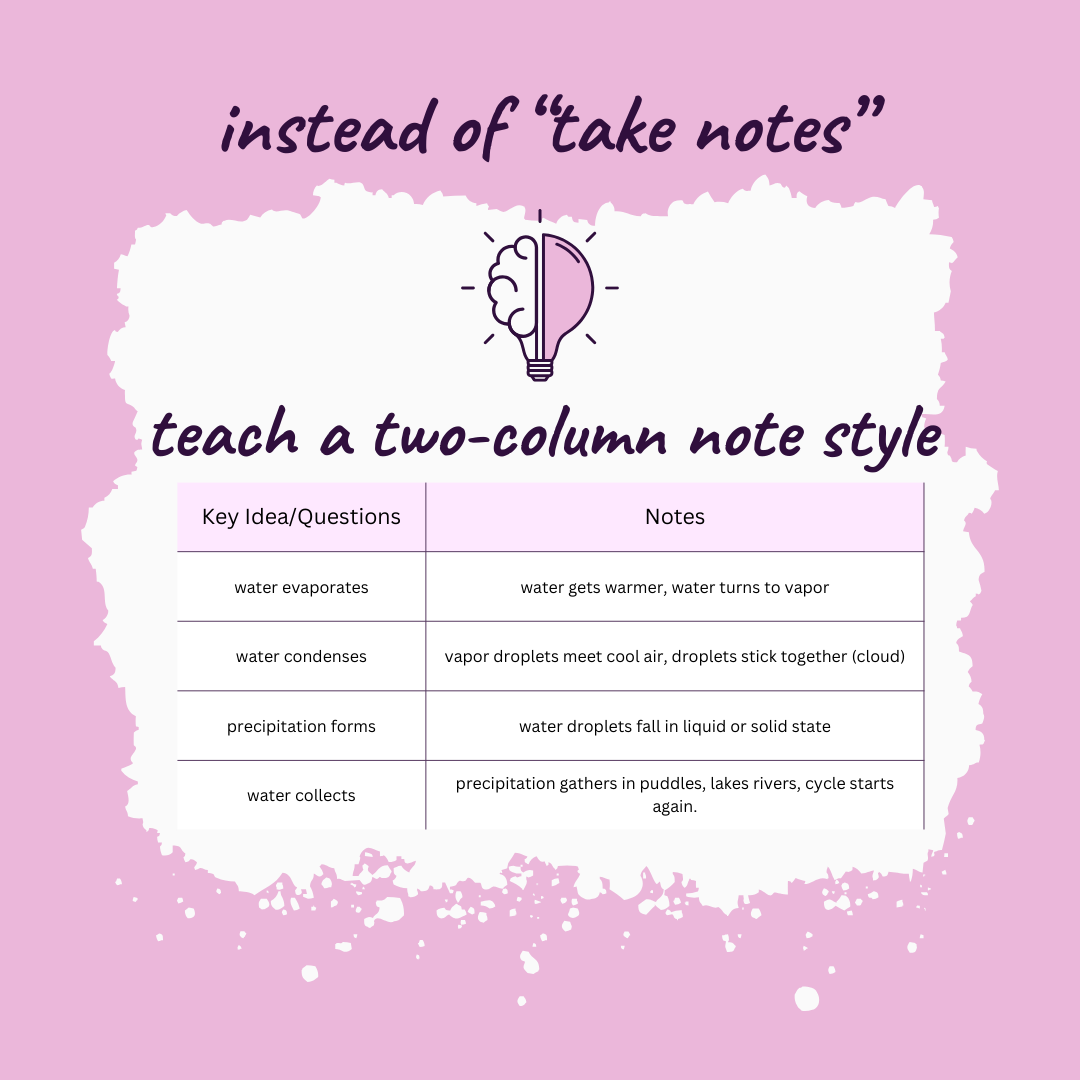
Many classroom writing pieces ask students to draw from their notes to create paragraphs or pages on a topic. In this case, student notes serve as the foundation for text generation. One way to ensure students are prepared to generate text is to consistently model and use an effective note-taking method. I recommend using the two-column style, perhaps also known as Cornell Notes. In a two-column note page, you divide a page into a smaller left-hand section and a larger right-hand section. The left side holds the chapter/main idea/vocabulary term, and the right side holds the details. You may notice that my notes (below) are written in sentence fragments, which is purposeful. If we teach students to take their notes in shorter phrases, we can lessen the cognitive load to make room for that new information. In addition, if we jot down phrases, we can then expand them into sentences when it comes time to write a draft.
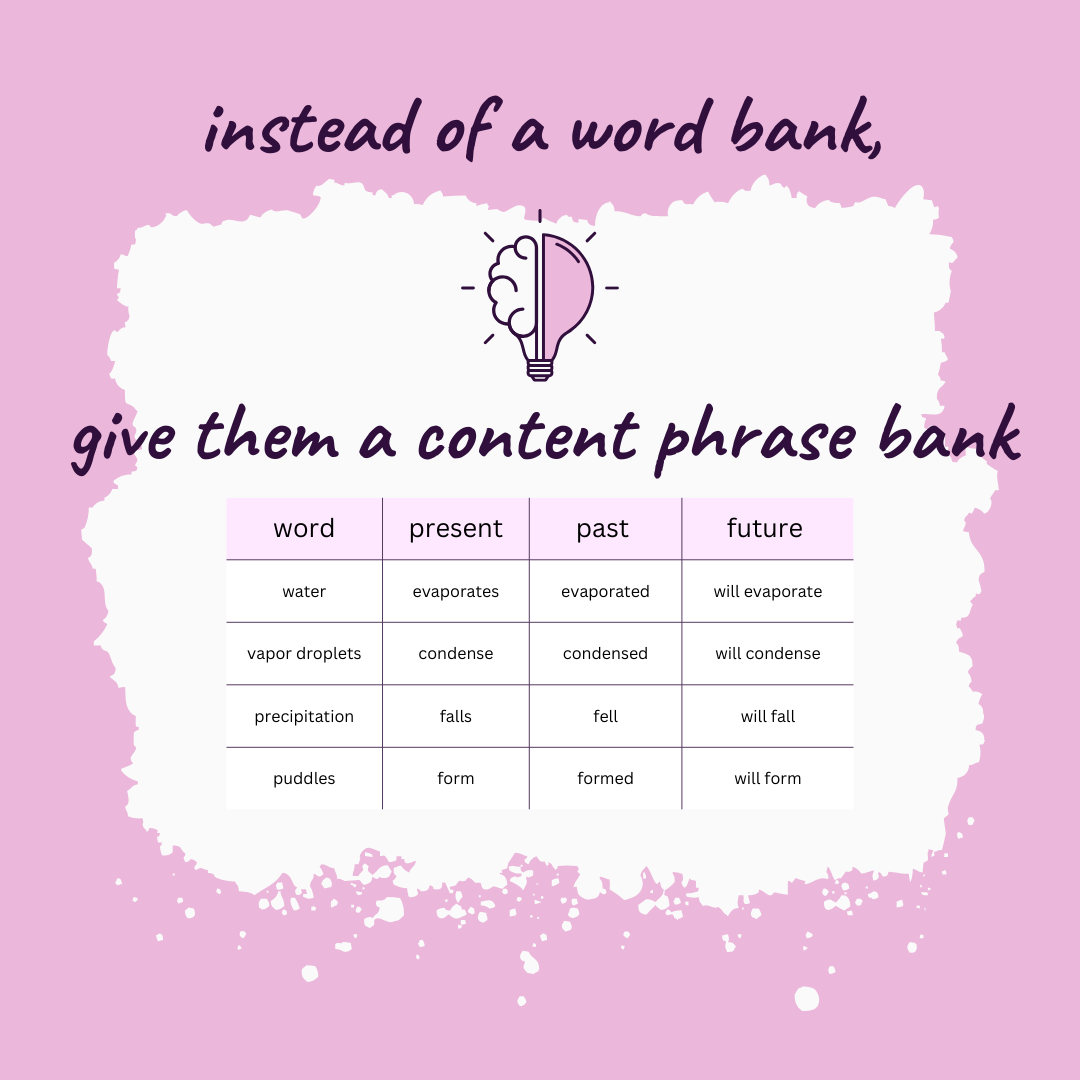
Many classrooms keep vocabulary words posted for reference, which is a wonderful start to helping students generate text. Notice I said start- because a word in isolation does not a sentence make. If students are meant to write an essay about the water cycle, a word bank will help kids spell the words (transcription), but will not help them use the word in a phrase or sentence.
To better support students, add the verbs that support the word in the context of the content area. See below for how I would tweak a word wall about the water cycle to support students with appropriate subject-verb agreement.
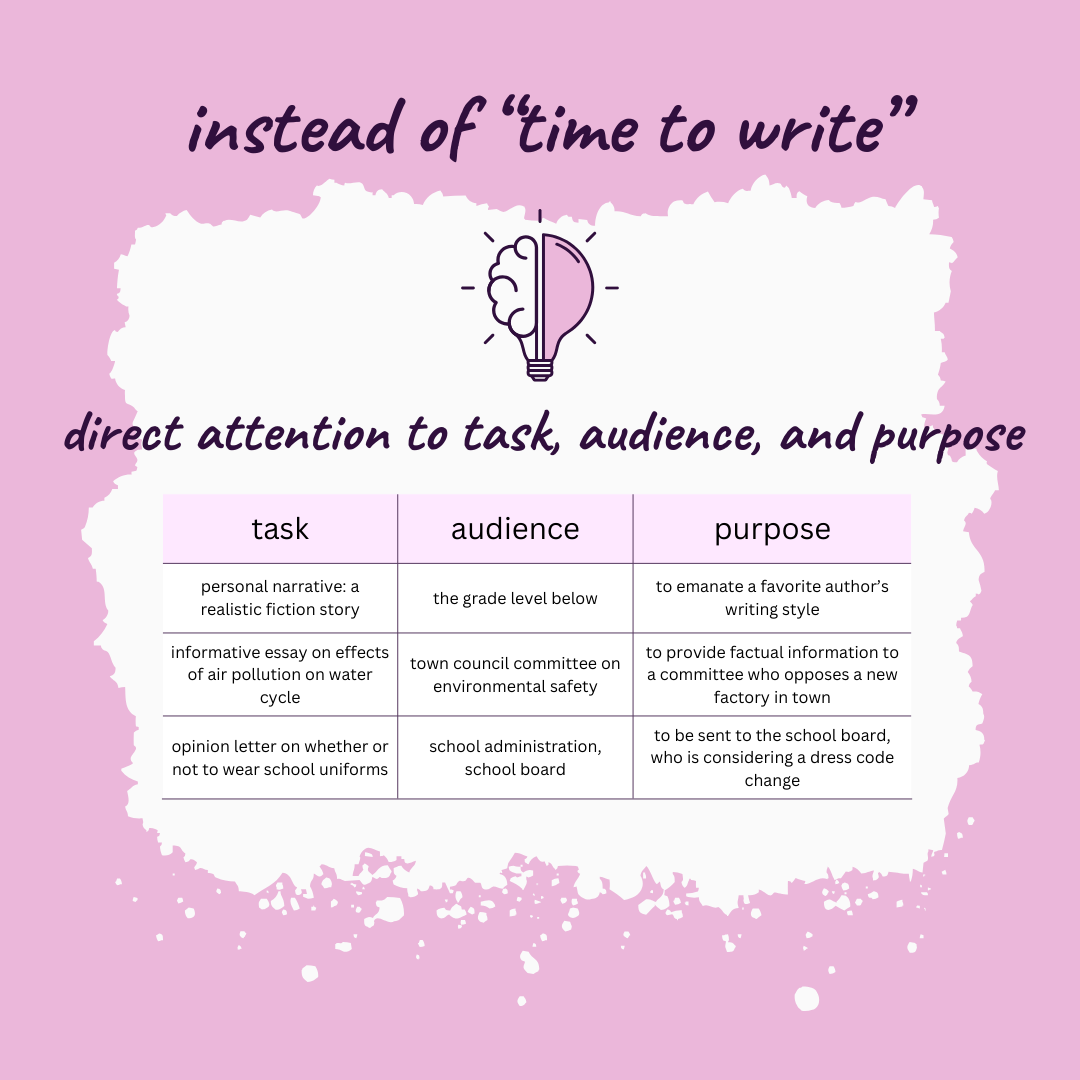
Sometimes I hear from teachers that students have strong vocabularies and strong transcription skills, but have trouble getting started because they get stuck on the brainstorming part. In those cases, I recommend connecting the task to its audience, and purpose. It’s helpful for students to understand who will read their writing (is it just the teacher? is it the class?) and what they will do with the information. Establishing a purpose and audience for writing takes the task from something abstract to something tangible and meaningful. See below for some ways to connect various genres to audiences and purposes.
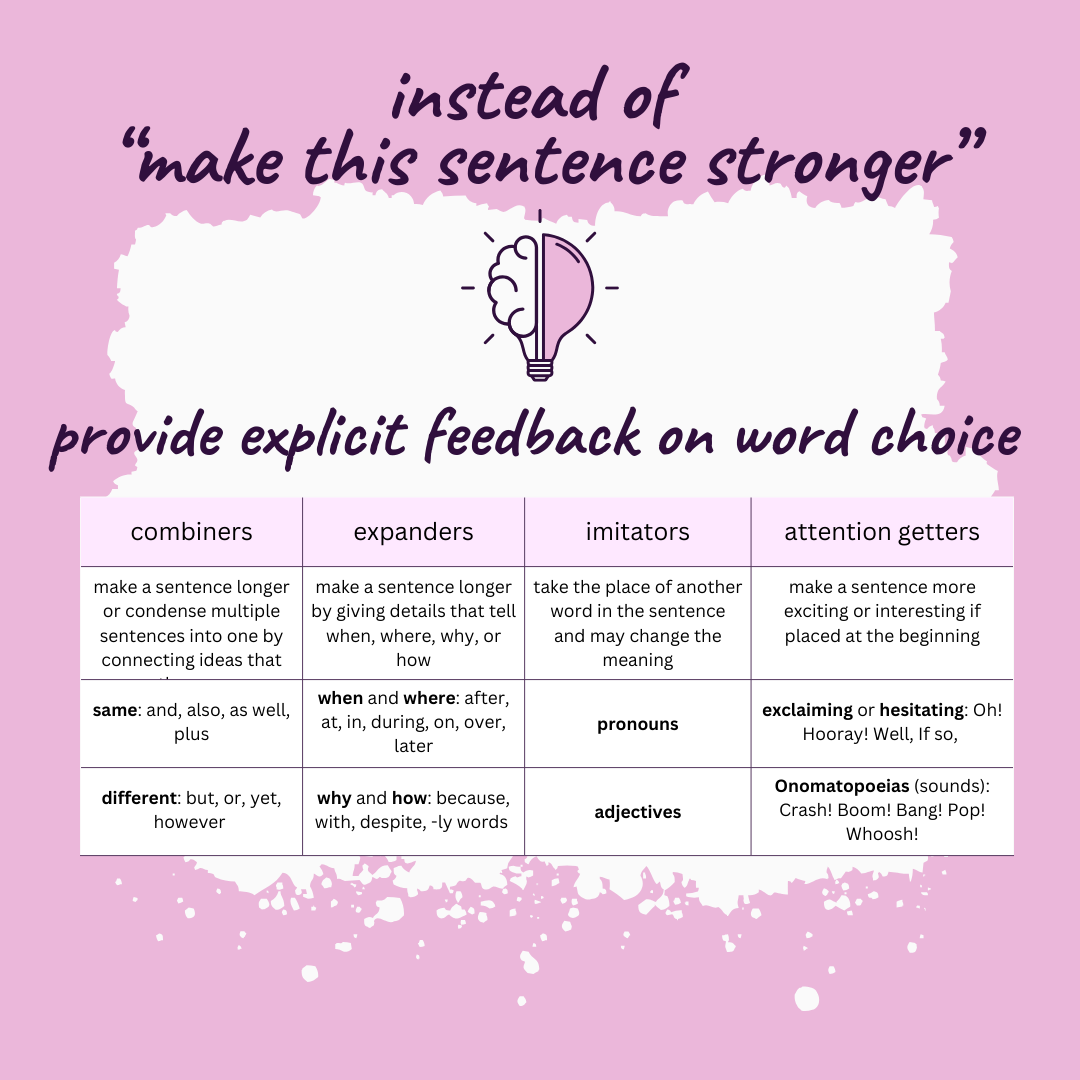
For some students, initial text generation comes easily, but the revising stage is where frustration mounts. I often teachers tell students to make their sentences stronger, juicier, or just plain better. While it’s well intentioned, it can seem harsh. This is where my own daughter struggles. Once after refusing to revise a writing piece and receiving a poor grade, she complained, “If I knew how to make it better I would have done it that way the first time!” So for kids like her, tweak your feedback so that it’s explicit. Discuss words and phrases that can be changed, and show them how to change it. If you haven’t already, use a piece of text and model revising for craft or clarity.
Supporting text generation can be done by making some purposeful instructional tweaks to increase achievement for all learners.
For my overview on The Not So Simple View, click here.
If your student struggles with transcription, read more here: (coming soon!)
If they struggle with executive function, read more here: (coming soon!)
For the full text on the Not So Simple View of Writing, click here. For a great take on it by Joan Sedita, click here.